
What this collection is designed to solve
A modular battery must match the inverter or PCS, communication method, required current, enclosure plan and expansion strategy. The module capacity should not be evaluated in isolation.
Lithium battery systems
Create a cleaner battery architecture for inverter, PCS and OEM projects. Compare two modular LFP formats by energy block, voltage, current, communication and mechanical layout before fixing the bill of materials.
Product overview
A modular battery must match the inverter or PCS, communication method, required current, enclosure plan and expansion strategy. The module capacity should not be evaluated in isolation.
Buyer value
Compare two modular formats before setting module quantity and system capacity.
Check voltage, current and BMS communication against the intended inverter or PCS.
Reserve the rack, cabling, protection and service space needed for the approved configuration.
Confirmed product range
Open a product page for verified model-level specifications, compatibility notes and project-fit guidance.
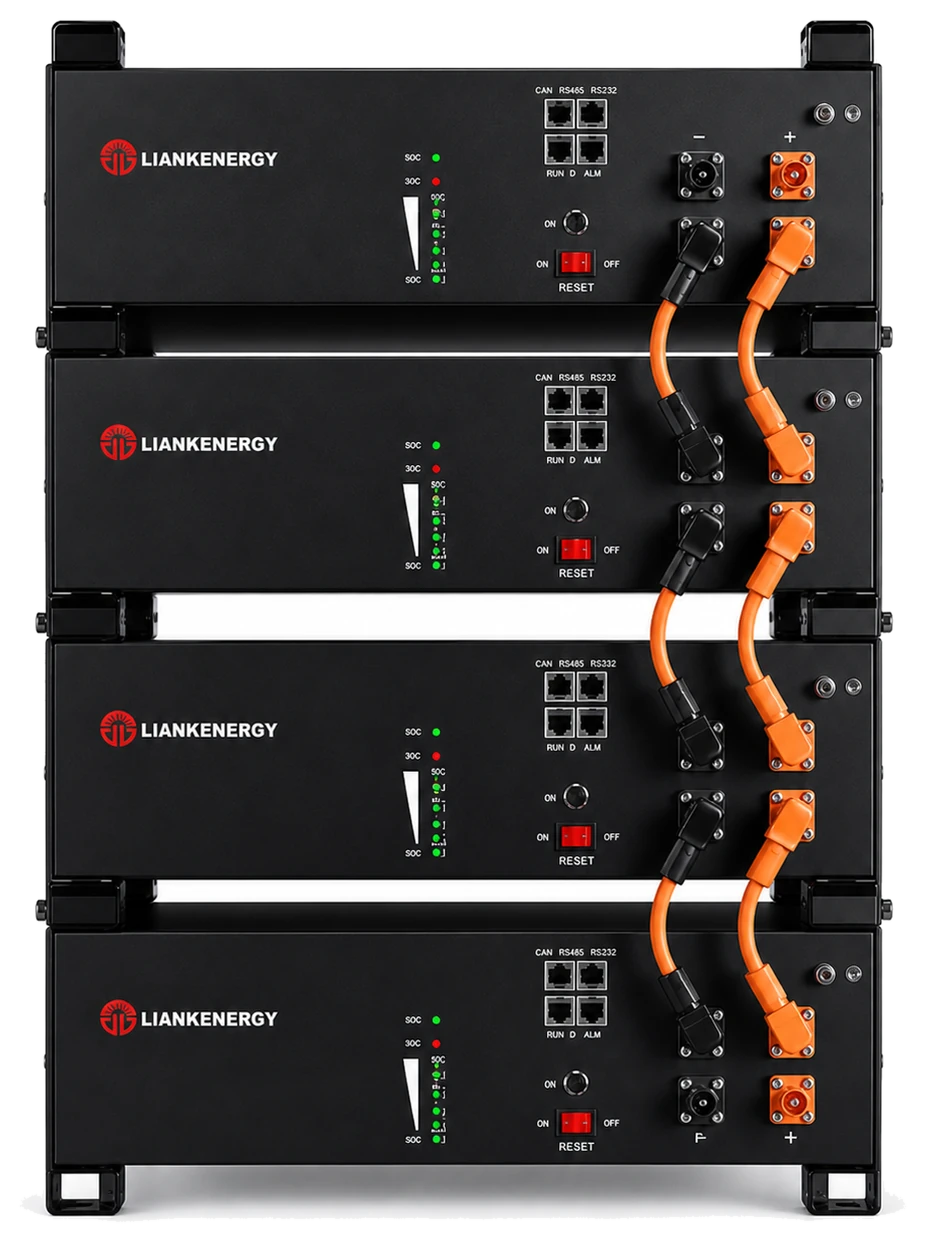
A modular LiFePO4 battery option for rack-based and scalable storage systems.
Consider whenThe design needs a smaller 51.2V rack battery building block.
Confirm firstModule count, current sharing, BMS communication and rack layout.
A higher-capacity modular format for projects requiring a larger energy block.
Consider whenA larger modular energy block reduces the number of units in the proposed layout.
Confirm firstSupported configuration, inverter or PCS protocol, protection and cable sizing.
Selection logic
Use these questions to narrow the product family before comparing model specifications.
Check nominal voltage, operating range, current and protection requirements.
Confirm CAN or RS485 protocol support with the intended inverter or PCS.
Define rack, stack, cable routing, clearances and service access.
Comparison framework
| Module choice | Start with voltage platform and required system energy |
|---|---|
| Integration checks | BMS, inverter or PCS, protection and cable sizing |
| Expansion plan | Number of modules, physical space and future configuration |
Project confidence
Bring the right inputs into the discussion early, then verify the selected model against current technical documents and project conditions.
Use actual loads, operating objectives and target runtime or duty cycle to frame the shortlist.
Review voltage, current, power electronics, protection and communication before quotation.
Check location, environment, access, clearances, service responsibilities and local requirements.
Frequently asked questions
Do not assume that different models, capacities or production batches can be combined. Confirm the approved configuration.
Many systems rely on CAN or RS485 communication for coordinated operation. Verify the supported protocol before ordering.
Check the maximum supported module count, current sharing, cable layout, protection and available installation space.
Project review
The battery format can be reviewed once the inverter or PCS, voltage, energy, current, communication and mechanical plan are defined.