
This guide helps you create a chemistry shortlist. It does not replace load analysis, capacity sizing or an exact model review.
What Is a Solar Battery
A solar battery stores electricity in chemical form and releases it when your loads need energy. The U.S. Department of Energy describes this as a reversible chemical reaction: charging stores energy, and discharging reverses the reaction to produce electrical current.
When people compare solar-battery types, they often mix three different decisions:
- Chemistry: lead-acid, lithium-ion, flow, sodium-ion or another electrochemical family.
- Product format: wall-mounted pack, rack module, stackable unit or custom battery bank.
- System architecture: DC-coupled or AC-coupled storage, backup or non-backup operation, and the inverter and controls used with the battery.
Types of Solar Batteries
The main types used in solar storage are lithium-ion, lead-acid and flow batteries. Lithium-ion includes LFP and NMC chemistries, while lead-acid includes flooded, AGM and gel designs. Each family has different requirements for cycling, space, maintenance, temperature control and system integration.
Lithium-Ion Solar Batteries
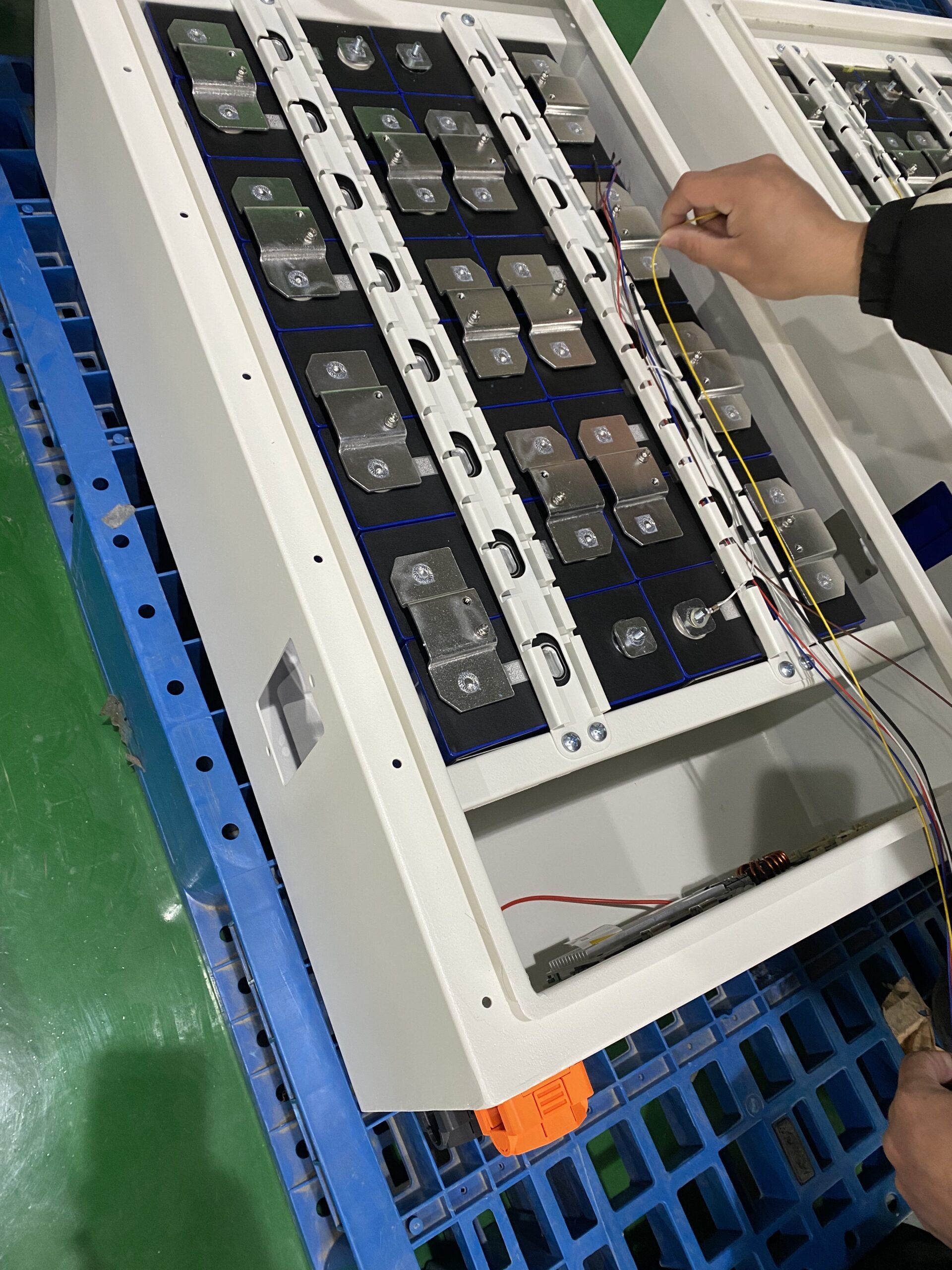
Lithium-ion is a family, not one chemistry. Government solar-battery guides identify lithium-ion as the most common technology in current household installations. Its main project advantages are compact packaging, efficient charging and relatively low routine maintenance.
Lithium Iron Phosphate Batteries
Lithium iron phosphate, usually shortened to LFP or LiFePO4, is widely used in stationary solar storage. The chemistry uses iron phosphate in the positive electrode. It is generally selected where daily cycling, thermal stability and service life are more important than fitting the maximum energy into the smallest possible space.
An LFP pack still needs a battery management system, or BMS. The BMS monitors cell voltage, temperature and current and can limit or stop operation when conditions exceed the approved range. It does not make the battery independent of correct charging, ventilation, protection or inverter communication.
For your project, LFP is worth shortlisting when the battery will cycle regularly, maintenance access is limited, or the available space favors a packaged system. Before choosing a model, check usable energy, continuous and peak power, approved temperature range, communication protocol, parallel rules and the evidence behind the warranty.
Nickel Manganese Cobalt Batteries
Nickel manganese cobalt, or NMC, is another lithium-ion chemistry. Solar Victoria notes that NMC can offer higher energy density, which means more energy can fit into a smaller or lighter package. LFP is typically larger for the same energy but is often chosen for its thermal characteristics.
That difference does not make every LFP product safer than every NMC product. Cell design, pack construction, thermal management, protection, installation and certification all affect risk. If space is the reason you are considering NMC, compare the complete installed system rather than cell chemistry alone.
For a deeper explanation of the labels, see the LiFePO4 and lithium-ion battery comparison. Remember that LFP is itself part of the broader lithium-ion family.
Lead-Acid Solar Batteries
Lead-acid batteries have a long history in stand-alone solar systems. Their familiar technology and large installed base can support some existing or maintained systems, but the project must account for usable capacity, charging time, space, ventilation, maintenance and replacement planning.
Flooded Lead-Acid Batteries
Flooded lead-acid batteries contain liquid electrolyte and are not sealed. They may require electrolyte checks, controlled charging, ventilation and a service area that can safely handle inspection and maintenance. NT WorkSafe notes that lead-acid batteries can emit hydrogen and oxygen during charging, which is why ventilation cannot be treated as an optional detail.
Flooded batteries may deserve evaluation where trained maintenance is available, the battery room is designed for the technology and the charging system is approved for the battery bank. They are a poor fit when the project has no maintenance owner or no suitable ventilated space.
AGM and Gel Batteries
Absorbent glass mat, or AGM, and gel batteries are sealed lead-acid designs. Their electrolyte is immobilized rather than freely flooded. This reduces routine electrolyte maintenance, but it does not remove the need for correct voltage settings, temperature control, protection and a manufacturer-approved installation.
AGM and gel are not interchangeable labels. Their charge settings and tolerance for different operating conditions can differ. If you are replacing one type with another, verify the charger or inverter profile instead of assuming that every “lead-acid” setting is suitable.
For your shortlist, sealed lead-acid may fit an infrequently cycled application or a planned replacement in an existing lead-acid system where the site can accept the weight and space. Verify the charge profile, usable energy, maintenance plan and expected replacement work.
Flow Batteries
A flow battery stores active materials in liquid electrolytes held in external tanks. Pumps move the liquids through a cell stack where electrochemical reactions charge or discharge the system. This architecture separates much of the energy capacity from the reaction stack: larger tanks can increase stored energy while the stack helps determine power.
That separation can be useful for long-duration stationary storage, but it also brings tanks, pumps, pipework and more physical infrastructure. Queensland's battery guidance describes flow batteries as scalable while also noting that residential availability is limited.
Flow batteries are therefore worth investigating when a commercial, industrial or grid project needs long discharge duration, has sufficient space and can support the maintenance and balance-of-system requirements. They are rarely the first shortlist choice for a compact home installation.
Emerging Battery Types
Sodium-ion, solid-state and other chemistries are developing quickly. Government sources describe them as emerging rather than universal replacements for current solar-storage batteries. A promising chemistry announcement is not the same as an available, supported product for your market.
If you are evaluating an emerging type, ask for current commercial references, safety documentation, operating limits, warranty terms, local service capability and proof of inverter or power-conversion compatibility. Treat laboratory performance and future production targets as research evidence, not as project guarantees.
How the Main Solar Battery Types Compare
| Decision Dimension | Lithium-Ion | Lead-Acid | Flow Battery |
|---|---|---|---|
| Typical project fit | Homes, small businesses, telecom, off-grid and packaged stationary storage | Legacy or maintained stand-alone systems with a defined service plan | Larger stationary projects and long-duration applications |
| Space and weight | Usually compact for the stored energy | Usually heavier and bulkier | Requires tanks, pumps and supporting space |
| Routine maintenance | Generally low, but monitoring and approved service still matter | Flooded types require more attention; sealed types reduce but do not remove service needs | Pumps, liquids and system auxiliaries add maintenance scope |
| Daily cycling | Commonly considered for regular cycling | Must be checked carefully against usable depth and charging requirements | Can suit repeated long-duration cycling, subject to the exact design |
| Integration | Requires BMS, compatible inverter or PCS, protection and communication review | Requires correct charger profile, protection, ventilation and bank design | Requires integrated stack, tanks, pumps, controls and power conversion |
| Main evidence risk | Assuming every lithium product has the same safety, life or protocol | Assuming familiar technology removes space, ventilation, maintenance or replacement requirements | Assuming scalability automatically makes the system suitable for a small site |
The table is a screening tool, not a product ranking. If two technologies both remain viable, compare exact models under the same load profile, usable-energy definition, temperature, power requirement and commercial scope.
Chemistry is only the first filter; final selection still requires the exact model's electrical, environmental and compatibility data.
How to Shortlist a Solar Battery Type
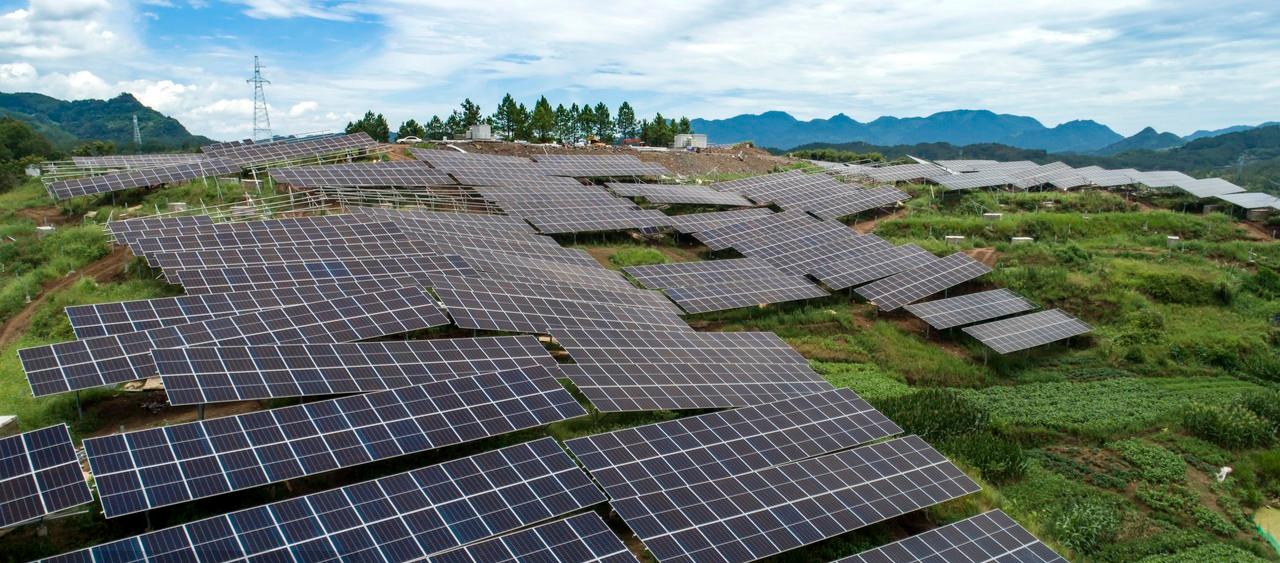
Use six project questions to reduce the chemistry options before you size a system.
How Often Will You Cycle the Battery
Daily solar self-consumption, unreliable-grid support and occasional emergency backup create different energy-throughput patterns. For daily or frequent cycling, lithium-ion – especially LFP – is usually the first family to evaluate because packaged systems are commonly designed for regular cycling and low routine maintenance. For occasional backup in an existing maintained system, sealed lead-acid may remain a candidate if the charge profile and replacement plan are approved. For repeated long-duration cycling at larger sites, investigate flow batteries when the site can support their auxiliary equipment. In every case, request exact-model evidence for the planned duty.
How Much Space and Weight Can the Site Accept
Measure the usable installation area, access route, floor or wall constraints and service clearance. When footprint or weight is tightly constrained, start with packaged lithium-ion systems and compare LFP with higher-energy-density lithium options only through exact model data. Lead-acid needs more room and structural allowance for the same usable-energy target, while flow batteries need space for tanks, pumps and access. Remove any family the site cannot safely house or service.
Who Will Maintain the System
Write down who will inspect the battery, review alarms and perform authorized service. If routine maintenance access is limited, a packaged lithium-ion system is usually the stronger starting point. Keep flooded lead-acid only when trained staff own electrolyte, ventilation and charging checks. Keep flow batteries only when the operator can support pumps, liquids and system auxiliaries. If no one owns those tasks, remove the technologies that depend on them.
What Temperature Will the Battery Actually Experience
Use the battery location, not just the regional weather forecast. A closed room, outdoor cabinet or uncooled equipment space can run hotter than the ambient air. Do not select a chemistry from a general temperature claim. Shortlist only models whose approved operating range, power limits and required ventilation or cooling match the measured site conditions. If the site cannot provide those conditions, change the location or remove that model from consideration.
What Must Connect to the Battery
Confirm nominal voltage, operating voltage window, continuous and peak current, communication protocol, inverter or power-conversion compatibility and protection requirements. If the inverter requires managed communication, begin with battery models on its approved compatibility path. An existing lead-acid charger does not automatically support lithium-ion, and a shared voltage label does not prove compatibility. Remove any option without a documented integration path.
What Must the Site and Service Plan Support
List the complete project responsibilities: battery, BMS, inverter or PCS, protection, thermal management, enclosure, commissioning, monitoring, documentation, service and expected replacement work. Choose packaged lithium-ion when the project needs a compact, integrated service path; consider maintained lead-acid only when the site owns its ventilation and service duties; investigate flow batteries only when the project can support tanks, pumps and specialist auxiliaries. Stop the shortlist if responsibility for any required subsystem is unclear.
After these six questions, you should have a shortlist, not a final purchase. The next step is load analysis, energy and power sizing, exact-model compatibility and a country-specific installation review.
If LFP remains on your shortlist, review the current residential energy storage range or lithium battery range and request the document set for the exact model under consideration.
Common Selection Mistakes
Choosing by Chemistry Name Alone
Two LFP batteries can have different current limits, communication protocols, temperature controls and warranty conditions. You should compare the complete model documents and system interface, not assume the chemistry label proves compatibility.
Comparing Nominal Capacity Instead of Usable Energy
The energy printed on a label is not always the energy your system can deliver to the load. Ask for the usable-energy definition, operating window and measurement point. Stop the comparison if suppliers are using different boundaries.
Choosing a Type Before Defining the Duty Cycle
Occasional backup, daily solar shifting and long-duration operation place different demands on a battery. Define how often the system will charge and discharge, the required duration and the expected standby time before comparing technologies. If the duty cycle is still unknown, do not select a chemistry from a generic “best battery” claim.
Ignoring the Inverter and Control Path
A battery does not operate alone. Verify the inverter or PCS, BMS communication, protection and commissioning responsibility. Matching voltage labels without an approved integration path is not enough.
Final Thoughts
The right solar-battery type is the one that fits your cycling pattern, site conditions, maintenance capability and system interfaces. Lithium-ion, lead-acid and flow batteries can all be valid technologies, but they solve different project constraints. Use chemistry to create a shortlist, then use exact-model evidence to make the decision.
If you share your load profile, required backup time, expected cycling, site temperature, available space and inverter plan, LIANKENERGY can help you identify which current LFP product documents and compatibility checks are needed before model selection.
Frequently Asked Questions
Which Solar Battery Type Is Best for Daily Use
Lithium-ion, especially LFP, is commonly shortlisted for regular solar cycling because packaged systems can provide compact storage with low routine maintenance. The final answer still depends on the exact model, temperature, usable energy, power, compatibility and warranty conditions.
Are AGM and Gel Batteries the Same
No. Both are sealed lead-acid designs, but they immobilize the electrolyte differently and can require different charging settings. Use the exact battery manufacturer's instructions rather than one generic sealed-battery profile.
Are Flow Batteries Suitable for Homes
Flow batteries can store energy for long periods and can be scaled with larger electrolyte tanks, but their tanks, pumps and supporting equipment make them uncommon in residential installations. Check local product availability and service capability before considering one for a small site.
Is LiFePO4 a Type of Lithium-Ion Battery
Yes. LiFePO4, also called LFP, is one lithium-ion chemistry. The broader lithium-ion category also includes NMC and other chemistries with different material and performance characteristics.
Can You Replace Lead-Acid With Lithium Without Changing Anything Else
Do not assume so. The charging profile, voltage window, current, protection, battery management system and inverter communication may all change. A qualified designer should verify the exact replacement architecture and local installation requirements.
Apply the guidance to your system
Share the load, capacity target, inverter model and installation conditions for a practical review.