
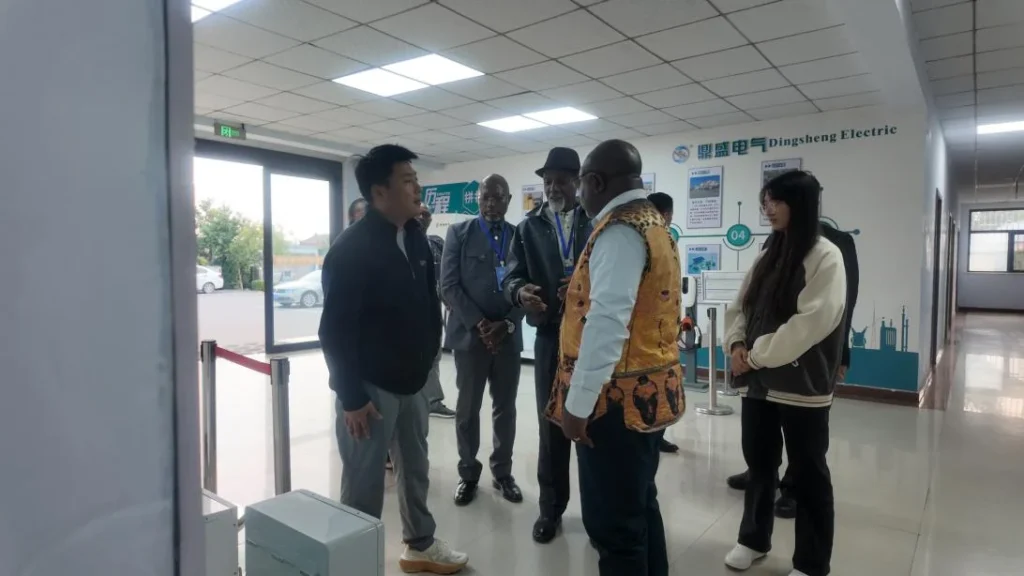
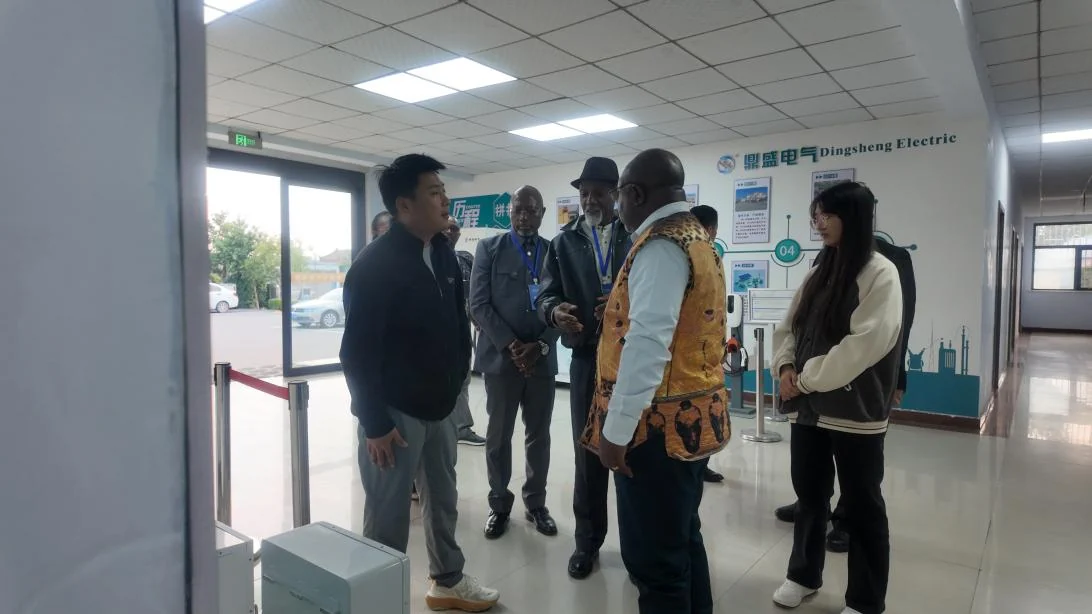
On October 21, 2026, a five-member delegation led by the mayor of Ebolowa, Cameroon visited Shandong Dingsheng Electrical Equipment Co., Ltd. The visitors were accompanied by company representatives Zhuo Xue'ang, Jing Changqing and Li Shifa during the tour.
The visit gave the delegation a direct view of the company's electrical and new-energy product lines. It also created an opportunity for both sides to discuss an important practical question: what information must be confirmed before equipment can be matched to real projects in Cameroon and other West African markets?
A Closer Look at Electrical and New-Energy Products
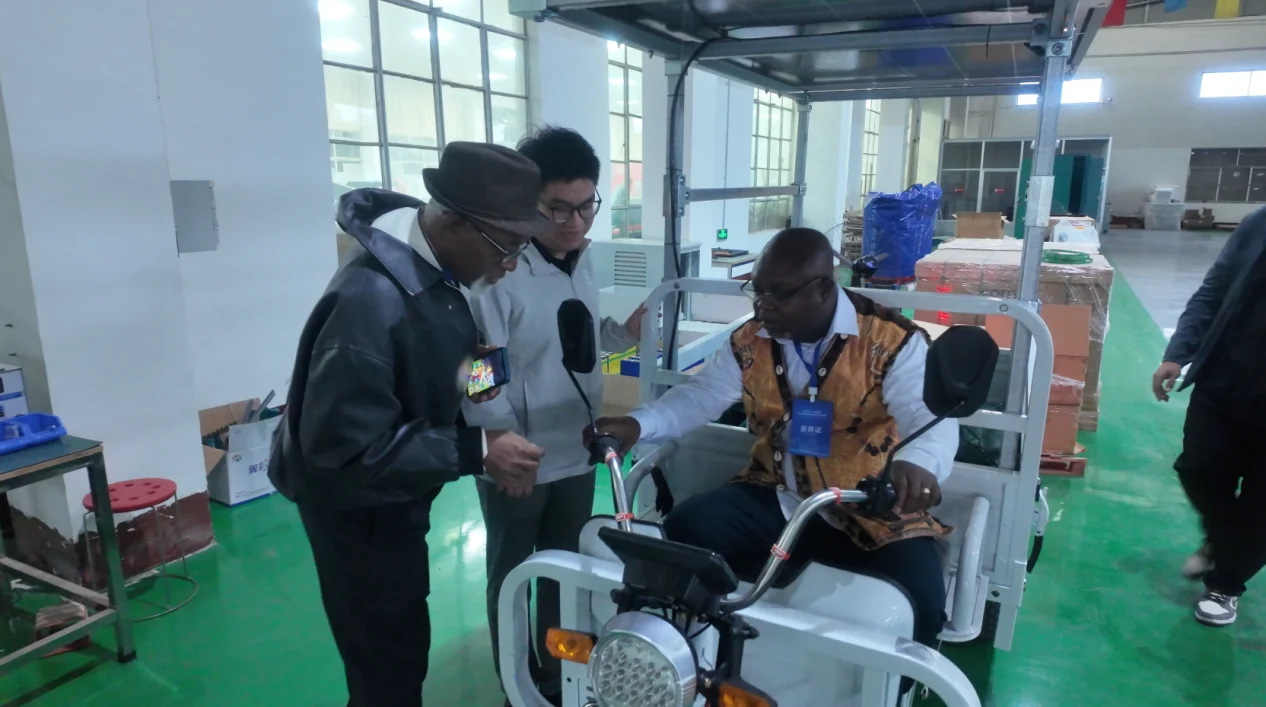
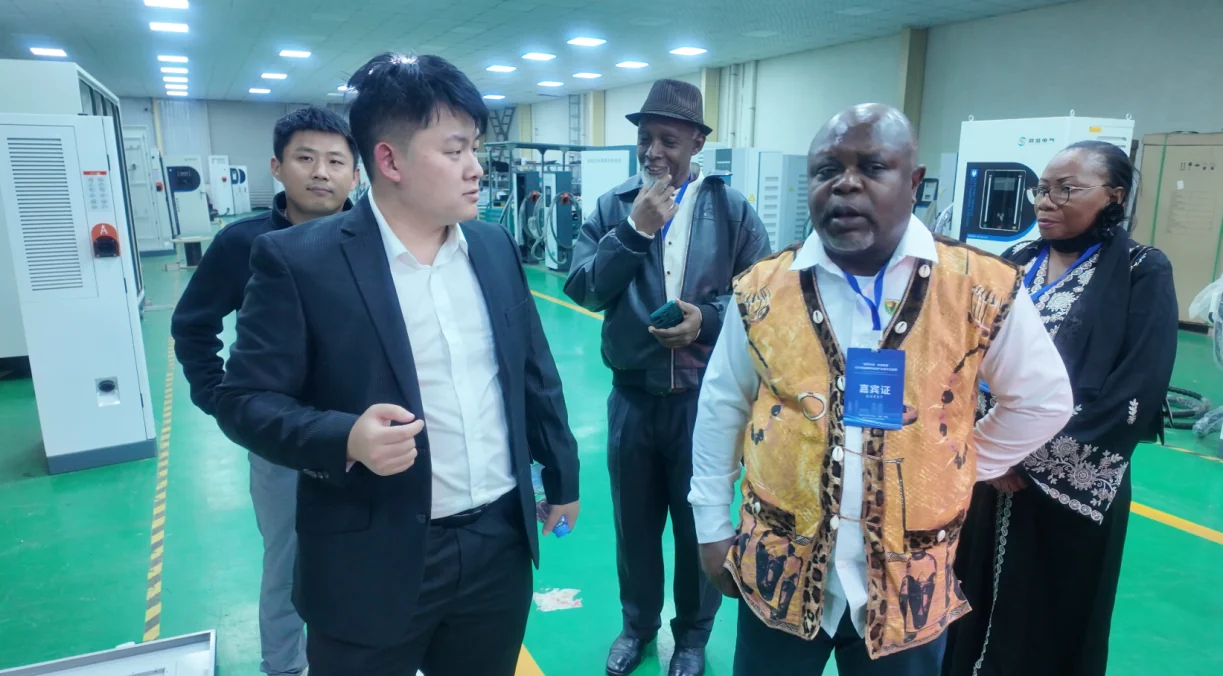
The delegation toured the electrical equipment workshop, charging equipment workshop, energy storage workshop, product display center and an integrated solar-storage-charging station. The visitors learned about the production and intended applications of high- and low-voltage switchgear, smart charging equipment, energy storage systems and solar-powered tricycles.
Company representatives explained what the products are designed to do, where they may be used and what supporting conditions they require. The delegation showed particular interest in charging equipment, energy storage and integrated solar-storage-charging applications.
Rather than treating the tour as a simple product display, the discussion connected the equipment to local operating conditions. The visitors asked how different products could fit local power conditions, environmental conditions and project needs.
Discussing Product Fit for Real Projects
Product fit cannot be decided from a single specification. A project team first needs to understand the intended application, grid conditions, load profile, voltage and frequency, installation environment, local approval requirements and expected service arrangement.
These factors may differ from one West African country or project to another. For example, a storage system designed for backup power may require a different configuration from one intended for daily energy shifting. Charging equipment must also be checked against the available supply, expected vehicle demand and site operating pattern.
During the visit, the delegation asked about product suitability, technical standards, application scenarios and follow-up support. The company's technical team responded based on the products and production capabilities presented at the site. The exchange helped both sides identify the project information that would be needed for a more detailed technical review.
From Manufacturing Capability to Project Preparation
Zhuo Xue'ang introduced the company's development in electrical equipment and its expansion into charging infrastructure, energy storage and integrated solar-energy applications. According to the company representatives, its work covers product development, manufacturing, system integration, installation support and technical service.
For an overseas project, however, manufacturing capability is only one part of the decision. The next stage should confirm the exact application, equipment configuration, technical documents, installation conditions, destination-market requirements and service responsibilities. These details help prevent a product that appears suitable on paper from creating avoidable problems during installation or operation.
Continuing Practical Communication
The visit established a direct communication channel between Shandong Dingsheng Electric and the visitors from Cameroon. It also gave both sides a clearer understanding of the questions that must be answered before discussing a specific project solution.
Following the visit, the parties can continue exchanging project information and reviewing equipment fit against verified local requirements. Shandong Dingsheng Electric looks forward to maintaining practical communication with customers and partners in Cameroon and the wider West African market.
Interested in Our Energy Solutions?
Contact our team for a project-focused energy storage discussion.